


Consulting engagements rarely collapse cleanly. The client doesn't send a termination notice. The project doesn't fail in one meeting. What happens is slower and more expensive: a deliverable gets questioned, a stakeholder goes quiet, a change request arrives without a change order, and somewhere in the middle of all of it, the invoice stops getting paid.
By the time the engagement is formally derailed, the billing problem has been building for weeks.
Most consulting firm owners recognize the pattern after they've lived it once. A write-off that should have been preventable. Hours logged against work the client later disputed. A final invoice that went unanswered around the same time the relationship went cold. The project failed. But the billing failure started earlier, at the moment they signed the SOW.
The firms that almost never end up in billing disputes are not luckier than their peers. They run tighter agreements.
Why billing and scope failure are the same problem
A consulting billing dispute is almost never really about money. The client doesn't dispute the invoice because the number is wrong. What the client disputes is a gap between what arrived and what they believed they had agreed to. The mismatch almost always traces back to a single source: a Statement of Work that was vague on deliverables, silent on exclusions, or both. The financial dispute is downstream of the scope failure.
According to PMI's Pulse of the Profession, 52% of all projects experience scope creep. More than half of all project-based work expands beyond the original agreement. In consulting, where scopes tend to be less prescriptive than in construction or IT, the proportion is likely higher.
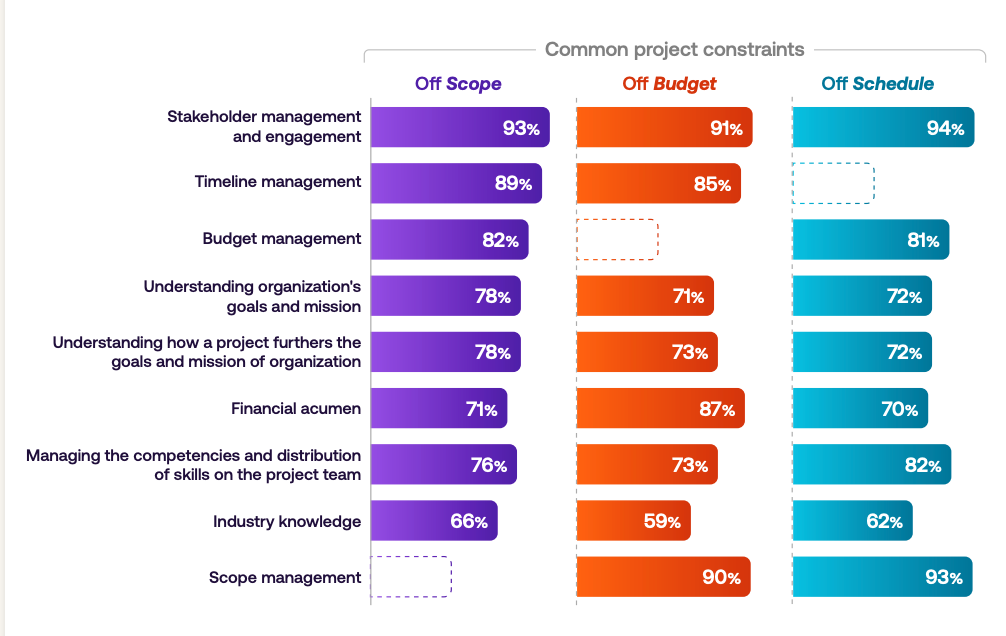
Wellingtone's State of Project Management Report ranks scope creep as the second most common cause of project failure, behind only unclear objectives. The two causes are connected. Unclear objectives at the scoping stage are precisely what allow scope to drift once the engagement begins.
The billing consequence is predictable. A client who receives a deliverable that doesn't match their expectation holds payment while they figure out what went wrong. Without a signed SOW that defines what "meeting expectations" actually means, including revision rounds, acceptance criteria, and explicit exclusions, the firm has no neutral reference point. The dispute becomes a negotiation. And the firm enters that negotiation after finishing the work.
Billing disputes in consulting are scope disputes with a financial mask. The mask comes off at invoice time.
See how - > https://www.youtube.com/watch?v=qRqJtZSr7V8
The five billing consequences of a derailed consulting engagement
When a consulting project goes sideways, the financial damage takes five distinct forms. Each one starts from a different failure point in the engagement, compounds in a different way, and requires a different structural fix. What they share is a common origin: an agreement that was too vague to protect the firm when things went wrong.
Disputed deliverables and withheld payment
The most common pattern. The firm delivers the work. The client decides it doesn't meet expectations. Payment stops.
Picture the scenario: a strategy firm delivers a market analysis the client commissioned at a fixed fee. The client expected an executive summary with three strategic options. The deliverable is forty pages of research with supporting appendices. Nothing in the SOW specified format, length, or what "final deliverable" meant in practice. The client considers it incomplete. The firm considers it done. The invoice sits.
Without an acceptance process in the SOW, including how many revision rounds the agreement covers, what criteria determine sign-off, and what happens when the client misses a review deadline, the firm has nothing concrete to reference. The firm completed the deliverable. The client disagrees. The consultant is negotiating from a disadvantage because the work is finished and the client hasn't paid.
Every SOW needs a written acceptance process. Without one, "done" is whatever the client decides it means at the moment the invoice arrives.
Scope creep that kills margin without triggering a dispute
Quieter than an outright dispute, and often more expensive. The loss is invisible because it was never billed.
A client asks for something adjacent to the brief. The consultant says yes. No change order. A week later, another ask. Also yes. By the time the project closes, 20 to 30 percent of the work delivered was never in the original scope and was never invoiced. McKinsey research on large capital projects shows that uncontrolled scope changes routinely add between 20 and 30 percent to original project volume. Consulting engagements follow the same pattern.
For fixed-fee engagements, every unbilled extra hour is margin the firm will not recover. The invoice reflects the agreed scope. The actual work exceeded it. No one disputes the invoice because the firm charged nothing for the extra work. The loss doesn't show up as a dispute. It shows up in the write-off line at year-end, with no client argument to reference because no charge was ever issued.
Client-delayed feedback that creates timeline disputes
A frequently overlooked failure mode, and a maddening one. The client goes quiet on a deliverable review for two weeks. The project timeline slips. The engagement closes late. Then the client uses the missed deadline as grounds to push back on the final invoice.
The consultant was not late. The client's own silence was the cause. But without a written clause tying the project timeline to the client's feedback obligations, the firm has no documentation to support that argument. A single sentence in the SOW closes the gap: if client feedback is delayed beyond five business days, the project timeline extends by an equivalent period. Without it, the timeline risk created by the client's silence is absorbed by the firm at billing time.
Payment details missing at collection time
The engagement starts. The work gets delivered. The invoice goes out. Only then does the firm discover the client's payment information was never captured.
The invoice sits. Calls get made. Three weeks pass.
The situation is a process failure dressed as a client problem. Payment information was never collected before work began. Every day of collection delay after a failed engagement is money the firm is unlikely to recover in full. Data from the National Association of Credit Managers and the Commercial Collection Agency Association shows that collection probability drops roughly one percentage point for every week an invoice ages past 60 days. A disputed invoice sitting at 90 days without an authorized payment method on file is already a meaningful collection risk.
Waiting until the invoice goes out to obtain payment information is the single most avoidable way to create that exposure.
The write-off decision and its real cost
When a dispute escalates, consulting firms typically face a binary choice: pursue payment at the cost of time, money, and the relationship, or write the invoice off and move on. Most firms choose the write-off. Most underestimate what they are actually giving back.
The write-off extends beyond the unpaid invoice amount. It's the total hours worked on the disputed deliverables, the internal time spent in dispute communications, and the opportunity cost of capacity that generated no revenue. A 10 percent write-down across a $1M consulting book is $100,000 in delivered work the firm absorbed without charge.
How to protect your billing before a project goes wrong
Four structural changes to the SOW, each written before work begins, eliminate the majority of consulting billing dispute triggers before the engagement starts. Better agreements prevent disputes more reliably than any collections process because they address the root causes: vague deliverables, missing payment authorization, undefined scope boundaries, and no mechanism for handling extras.
Write a SOW that explicitly lists exclusions alongside the deliverables
The exclusions list is the most consistently skipped section in consulting SOWs. And it is the section that does the most work when a client asks for something the firm didn't plan to include.
Every scope dispute starts from the same place: a client asks for something adjacent to the agreed brief, and without an explicit exclusions list, nobody has a neutral reference point. A SOW without exclusions is a one-sided document. What is explicitly not in scope matters as much as what is. Name it specifically. "Financial modeling is excluded from this engagement" prevents a dispute that "business strategy deliverables" quietly invites. The more specific the exclusions, the fewer the grey areas the client can occupy later.
For a deeper look at how to structure scope protections in client agreements, Anchor's guide to out-of-scope work covers the mechanics in operational detail.
Build a change control process into the agreement
One clause. It states how out-of-scope requests are submitted, reviewed, and approved, and it confirms the firm will not begin work on any additional requirement until a signed change order is in place.
A formal change control process is the single most effective structural protection against margin-eroding scope creep. It doesn't prevent clients from asking for more work. It ensures that when they do, there is a documented process for pricing and approving the extras before they become unbilled hours. Most scope creep costs consulting firms because the process for handling out-of-scope requests was missing from the agreement, not because clients were acting unreasonably. Build the process in before day one.
Capture payment details before work begins
The highest-return action from a cash flow standpoint. When a client authorizes a payment method at the agreement stage, before the firm logs a single hour, the collection conversation never starts from zero. If the engagement later deteriorates, the firm has an authorized payment source connected to the agreed scope.
Platforms like Anchor build payment authorization into the proposal and agreement workflow directly. The client signs the agreement and connects a payment method in the same step. If the relationship falls apart three months later, the collection starting position is categorically different from a firm that is now trying to obtain payment information from a client who has stopped responding.
Learn about Anchor’s integrations to make your work seamless with your own tools and automations.
Pre-authorized payment versus none is often what separates a recoverable billing problem from a written-off engagement.
Define timeline dependencies in the client's obligations section
One clause that consulting SOWs almost never include: a statement that ties the project timeline to the client's own responsiveness. If client feedback is delayed beyond five business days, the project timeline adjusts by the same period. The consultant is not liable for a schedule the client disrupted.
The clause eliminates the "you delivered late" argument when the lateness was caused by the client's silence. Without it, timeline risk created by the client gets carried by the firm. It costs nothing to add and protects the firm against one of the most common bad-faith billing arguments.
What to do when a billing dispute has already started
For consulting firm owners already in a billing dispute, the path forward is procedural, not emotional. The goal is to document the gap between what was delivered and what the client claims was agreed, present that documentation clearly, and follow whatever escalation path the original agreement specifies.
Pause active work on the disputed scope and acknowledge the dispute in writing immediately. Gather the original SOW, the full email chain, and documentation of what the firm delivered. Identify the specific gap between what was delivered and what the client claims was agreed. Present the documentation without framing it as an accusation, because documentation speaks for itself.
If direct communication doesn't resolve it, the original agreement should specify the escalation path: mediation, arbitration, or legal action. If the agreement didn't include a dispute resolution clause, that's the lesson for the next engagement. For a framework on what to include in consulting agreements before work starts, including dispute resolution language and payment terms, this engagement letter guide covers the key elements. No legal advice is offered here. The correct path depends entirely on the specifics of the agreement and the jurisdiction.
One practical note: the longer a disputed invoice sits unresolved, the lower the probability of recovery. Acknowledging the dispute quickly, in writing, with supporting documentation, is both the professional response and the financially correct one. Disputes that drift past 90 days without resolution become collection problems in addition to relationship problems, and the two rarely separate cleanly.
Frequently asked questions
What would you do if a customer disputes an invoice?
Pause collections on the disputed amount and acknowledge the dispute in writing the same day. Gather the signed agreement and documentation of what the firm delivered. Identify the specific claim: is the dispute about the deliverable itself, the timeline, the scope, or the amount? Resolve through direct communication if possible. If the original agreement includes a dispute resolution clause, mediation or arbitration, follow it. If it does not, document everything and evaluate escalation options based on the invoice value and the relationship.
How do you handle billing discrepancies in consulting?
Compare the invoice against the original signed agreement, not against the client's current expectation. Identify the specific line item or deliverable in dispute. If the SOW addresses it, the SOW is the reference point. If the SOW is silent on the issue, that silence is the source of the ambiguity and the starting point for resolution. Most billing discrepancies in consulting trace back to something that was not written down at the start of the engagement, not to arithmetic errors or bad faith.
What is the fastest way to prevent consulting billing disputes?
Capture the client's payment method before work begins. Write the SOW with an explicit exclusions list alongside the deliverables. Build a written change control process into every agreement and require a signed change order before starting any out-of-scope request. These three structural changes eliminate the most common dispute triggers before any work starts. For a closer look at how agreement terms connect to billing automation, this automated billing guide covers the operational mechanics.
The agreement is the billing system
Most consulting billing disputes are not about honesty. They are about ambiguity. Vague agreements, missing payment details, and informal scope requests create the conditions for disputes before a single deliverable is produced.
The firms that almost never end up in billing disputes are not more ethical than their peers. They run better agreements. Signed scope with explicit exclusions. Payment authorized before day one. Change orders for every extra, before that extra becomes a billable hour no one planned to absorb.
When the agreement is clear, disputes stop before they start.