


If you feel like you're constantly chasing payments, let me tell you something: it's not a personal failing, it's a process failing. Relying on spreadsheets, calendar alerts, and manual email follow-ups is a recipe for frustration, human error, and delayed payments. You can't solve a system problem with more effort. The real solution is to fix the broken system itself. This is what modern collections management is all about—implementing an automated, streamlined process that runs quietly in the background, ensuring you get paid on time without turning it into a major project every single month.
Key Takeaways
- Stop Chasing Payments by Starting Smarter: The best way to guarantee on-time payments is to make them a non-issue from the beginning. By requiring clients to connect a payment method when they sign your proposal, you eliminate the need for follow-ups and awkward conversations.
- Automate Your Workflow to Reclaim Your Time: Every minute spent manually creating invoices or reconciling payments is a minute you can't bill. A fully automated system handles these administrative tasks, preventing revenue leakage and freeing you up to focus on high-value client work.
- Connect Your Tools for Confident Cash Flow: Using separate systems for proposals, billing, and accounting creates confusion and uncertainty. An integrated platform provides a single source of truth, giving you a real-time view of your finances and the predictable cash flow needed to plan for growth.
What Is Collections Management for Accounting Firms?
Let's be honest: "collections management" sounds a bit intense, maybe even a little intimidating. But all it really means is having a system to track, manage, and collect the money your clients owe you. It's the entire process that ensures your invoices get paid on time, keeping your firm's cash flow healthy and predictable. Think of it as the financial engine of your business—without a smooth-running collections process, everything else can grind to a halt. It's not about being aggressive; it's about being professional, organized, and ensuring you get paid for the incredible value you provide.
Why a Solid Collections Process Is Non-Negotiable
A reliable collections process is your firm's first line of defense against the risks of unpaid invoices and unpredictable cash flow. Without one, you're left guessing when money will come in, which makes it nearly impossible to plan for growth, payroll, or even your own salary. The challenges of proactive collections management are real—from trying to predict future needs to staying on top of every client's payment habits. This is where automation changes the game. Using automated collections tools to streamline your workflow not only saves a massive amount of time but also cuts down on the human errors that inevitably happen with manual tracking.
The True Cost of Chasing Payments
If you're still relying on spreadsheets and manual email follow-ups to chase payments, you know how draining it can be. Beyond the frustration, this outdated approach has a real financial cost. These manual methods are notorious for how they waste time and cause mistakes, leading to delayed payments and awkward client conversations. The difference is staggering. According to research on credit and collections management, firms that automate their collections get paid 20% faster and have 25% less money past due. Investing in a modern collections strategy isn't just an expense; it's a direct investment in your firm's cash flow and long-term stability.
What Are the Core Steps in a Traditional Collections Process?
If you've ever managed a firm's finances, this probably sounds familiar. The traditional collections process is a multi-step, hands-on affair that feels like it was designed to take up as much of your time as possible. It's a cycle of creating, sending, chasing, and reconciling that leaves way too much room for error and awkward client conversations. Let's walk through the steps that most firms are still stuck using.
Sending Invoices Manually
It all starts with the invoice. You or someone on your team sits down to create and send invoices one by one. This often involves pulling data from different places, double-checking the math, and attaching it to an email. This manual approach is not just slow; it's prone to mistakes. Sending an invoice to the wrong client or with an incorrect amount can damage client trust and delay payment. This reliance on spreadsheets and emails creates a system with limited tracking, making it tough to get a clear picture of your accounts receivable at a glance.
Following Up on Overdue Payments
Once an invoice is past due, the real fun begins. This is where you start sending follow-up emails and making phone calls, gently (or not-so-gently) reminding clients that they owe you money. It's a time-consuming and often uncomfortable task that takes you away from client work. While some firms use debt collection management software to automate reminders, without an integrated system, you're still just managing another tool. Each follow-up is a manual effort that drains energy and can strain the client relationship you've worked so hard to build.
Processing and Reconciling Payments
When a payment finally arrives, the work isn't over. You have to process it, whether it's a paper check that needs depositing or a credit card payment that needs to be run. Then comes reconciliation—matching the payment to the right invoice in your accounting software. This step is absolutely critical for maintaining accurate financial records and a healthy cash flow, but it's another manual touchpoint that eats up administrative time. If a client pays multiple invoices at once, the reconciliation process can become even more complicated.
Handling Disputes and Delays
What happens when a client questions an invoice or delays payment due to a dispute? In a traditional workflow, this brings everything to a halt. You have to dig through emails and notes to clarify the scope of work, justify the charges, and hopefully come to a resolution. Addressing these issues promptly is essential, but it pulls you into reactive problem-solving mode. The challenges in proactive collections management often stem from a lack of clarity upfront, turning what should be a simple payment into a lengthy negotiation.

How Can You Create a Collections Policy That Works?
A solid collections policy isn't about being the bad guy; it's about creating clarity and setting expectations so you never have to be. Think of it as the foundation of a healthy client relationship. When everyone is on the same page from day one, you can focus on the work you love instead of worrying about when—or if—you'll get paid. A great policy is your first line of defense against awkward conversations and unpredictable cash flow.
But a policy is only as good as your ability to enforce it. While defining your rules is a critical first step, the real magic happens when you use a system that automates the entire process. Instead of just writing down your terms, you can build them into a workflow that runs on its own. This is where you can move from simply having a policy to having a bulletproof collections process that protects your revenue and your time.
Set Clear Payment Terms from the Start
The best way to avoid late payments is to make your expectations crystal clear before any work begins. Your payment terms should be straightforward and easy to find, covering everything from due dates and accepted payment methods to any consequences for late payments. When clients know exactly what to expect, there's no room for confusion later on. This initial conversation sets the tone for the entire professional relationship.
This is why building your terms into an interactive proposal is so effective. With a tool like Anchor, you don't just send a PDF with terms listed at the bottom. Instead, clients accept your terms and connect their payment method—either ACH or credit card—all in one step before you even start. This simple action of securing payment details upfront transforms your policy from a suggestion into a concrete, agreed-upon plan.
Define Your Communication and Follow-Up Strategy
A traditional collections policy often includes a detailed schedule for follow-ups: when to send the first gentle reminder, when to make a phone call, and so on. This strategy is built on the assumption that you'll have to chase payments. But what if you could eliminate the chase altogether? An effective collections process shouldn't rely on your team remembering to send follow-up emails.
Instead of a follow-up strategy, think about a transparency strategy. With an automated system like Anchor, payments are charged automatically based on the terms your client already approved. The communication shifts from "Your invoice is overdue" to "Just a heads-up, your scheduled payment will be processed on this date." This keeps your client informed without putting you in the position of a debt collector, preserving the positive relationship you've worked hard to build.
Decide When and How to Escalate
Knowing when to escalate an overdue account is a stressful part of any traditional collections policy. It often involves a painful progression from polite emails to firm phone calls and, in the worst-case scenario, handing the account over to a collections agency. This process is not only time-consuming but can also permanently damage client relationships. Every step of the escalation ladder adds more administrative burden and emotional stress to your plate.
The goal should be to create a system where escalation is never necessary. By capturing payment methods at the time of signing the engagement, you sidestep the entire issue of non-payment. Because Anchor automatically charges the client's saved payment method based on your agreement, there are no overdue invoices to escalate. You can completely remove this section from your policy, freeing your team to focus on valuable work instead of difficult conversations.
Put It All in Your Engagement Letter
Your engagement letter is the single source of truth for your client relationship. It should clearly outline the scope of work, your responsibilities, the client's responsibilities, and, of course, your payment and collections policy. Having everything documented in this foundational agreement protects both you and your client, serving as a reference point if any questions arise down the road. It's the cornerstone of a transparent and professional partnership.
You can make your engagement letter even more powerful by turning it into an actionable starting point. Anchor's smart proposals function as dynamic, digital engagement letters. When a client signs, they aren't just agreeing to a document; they're kicking off an entire automated workflow. The signed agreement automatically triggers invoicing and payments according to the schedule you've set. This connects your policy directly to your process, ensuring your terms are followed without any manual effort.
Who Is Actually Managing Collections at Your Firm?
If you had to give someone at your firm the official title of "Collections Manager," who would get it? For most firm owners, the honest answer is probably, "Me." You're the one who ultimately feels the pressure when payments are late, and you're often the one who has to step in to get things sorted. But juggling client relationships and chasing down invoices is a recipe for burnout and awkward conversations.
This isn't just a minor inconvenience; it's a fundamental conflict in your role. You're the trusted advisor, the strategic partner, and the face of the firm. Having to switch hats to become the bill collector undermines the very relationship you've worked so hard to build.
The Firm Owner's Dilemma
In places like museums and archives, a collection manager is a highly specialized professional tasked with protecting the institution's most valuable assets. In your firm, your accounts receivable is one of your most valuable assets, yet its management often falls to you by default—on top of everything else you do. You're trying to be a great leader and advisor, but you're stuck managing a process that puts you at odds with your clients.
This is the core dilemma for firm owners. You want to focus on high-value work and nurture client relationships, but the financial health of your business depends on getting paid on time. Like many institutions that face challenges and limitations with staffing and budgets, you're forced to wear too many hats. When collections becomes one of them, it's often the client relationship that pays the price.
The Administrative Burden
So, what if you're not the one personally sending payment reminders? In that case, the responsibility likely falls to an office manager or administrative professional who is already swamped. Their collections process probably involves a messy spreadsheet, a series of calendar alerts, and a folder of email templates that range from "gentle nudge" to "seriously, where's the money?"
This isn't an effective system; it's a manual, time-consuming chore that drains your team's energy and focus. The real issue isn't the person doing the work—it's the lack of a proper system to support them. Many professional services firms suffer from the lack of good management information systems needed to make collections run smoothly. This administrative burden creates a bottleneck that slows down cash flow, invites errors, and pulls your team away from tasks that actually generate revenue and delight clients. It's a systemic problem that can't be solved with more effort, only with a better process.
What Are the Biggest Collections Challenges Firms Face?
If you've ever felt like you spend more time chasing payments than doing the work you love, you're not alone. The traditional collections process is riddled with friction points that create stress for you and your clients. These aren't just minor annoyances; they're significant hurdles that can stifle your firm's growth, strain relationships, and make running your business feel like an uphill battle.
From the cringey follow-up emails to the constant uncertainty about your cash flow, these challenges are a direct result of outdated, manual systems. Relying on spreadsheets, calendar reminders, and separate invoicing tools creates cracks in your process—cracks where time, money, and client goodwill can easily slip through. Understanding these specific pain points is the first step toward fixing them for good. Let's break down the four biggest collections headaches that firms like yours face every day.
Awkward Client Conversations
We've all been there. You have a great relationship with a client, but their invoice is 30 days past due. Now you have to switch from being their trusted advisor to a polite-but-firm debt collector. It's uncomfortable for everyone. These awkward conversations are a direct result of a broken process. When you have to manually track who has paid and who hasn't, the follow-up feels personal and confrontational. It puts a strain on the client relationship you've worked so hard to build, turning a simple transaction into a source of tension.
Unpredictable Cash Flow
How can you plan for growth when you don't know when money is coming in? When payments are sporadic, forecasting becomes a guessing game. This makes it incredibly difficult to manage your firm's finances with confidence, whether you're planning for payroll, investing in new software, or hiring your next team member. This lack of predictable cash flow is one of the biggest stressors for firm owners. Instead of focusing on strategic decisions, you're stuck worrying about whether you'll have enough cash on hand to cover next month's expenses.
Wasted Billable Hours
Think about all the time you or your team spend creating invoices, sending them out, tracking payments, and following up on overdue accounts. Every minute spent on these administrative tasks is a minute not spent on billable client work. These wasted billable hours add up fast. If you spend just five hours a week on collections, that's over 250 hours a year that could have been spent serving clients and generating revenue. Manual collections aren't just inefficient; they're a direct drain on your firm's profitability.
Revenue Leakage from Missed Invoices
When your billing process is manual, it's frighteningly easy for things to fall through the cracks. A one-off project that never gets invoiced, a scope change that isn't billed for, or an annual price increase that's forgotten—it all adds up. This is called revenue leakage, and it can quietly siphon away thousands of dollars from your bottom line each year. Without an automated and integrated system, you risk losing track of aging balances and leaving hard-earned money on the table simply because your process has too many gaps.
How Can You Automate Your Entire Collections Workflow?
If the traditional collections process sounds like a recipe for headaches and wasted hours, you're right. But what if you could sidestep the entire manual chase? The answer isn't hiring more admin staff or just working harder—it's automation. By using the right tools, you can create a system that handles the entire process for you, from the moment a client says "yes" to the moment the cash is in your account.
Automated collections use workflow tools to streamline everything, allowing you to manage your collections more efficiently from the initial proposal stage all the way to payment. This isn't about replacing the human element of your client relationships. It's about removing the administrative friction so you can focus on the work that actually matters. Imagine a world where you never have to send a "friendly reminder" email again. That world is entirely possible, and it starts with connecting your entire workflow on a single, intelligent platform.
From Proposal to Payment in One Platform
The real magic happens when your proposal, contract, invoicing, and payments are all part of the same connected system. Instead of using one tool to create a proposal, another to get it signed, and yet another to send invoices, a unified platform links them together. When a client signs your digital proposal, they also connect their payment method upfront. This single action triggers a domino effect: the engagement is locked in, the invoicing schedule is automatically created, and future payments are set to be processed without any further action from you or your client. This creates a seamless, professional experience that builds trust from day one and sets the stage for a smooth financial relationship.
Eliminating Manual Invoicing Forever
Let's be honest: manual invoicing is a time-suck prone to human error. You have to remember to create the invoice, double-check the details, convert it to a PDF, and then manually email it to the client. Each step is an opportunity for a mistake that could delay payment. Modern billing and collections software employs powerful tools to automate and optimize this process, effectively eliminating the need for manual invoicing. Once your client signs an agreement, the system generates and sends invoices automatically based on the agreed-upon schedule—whether it's recurring, milestone-based, or a one-time project. This means no more forgotten invoices, no more typos, and no more revenue leakage from simple mistakes.
Getting Paid Automatically and On Time
The ultimate goal of any collections process is, of course, to get paid. But chasing payments drains your energy and can strain client relationships. With a combined and automated system, you can overcome challenges like tracking aging balances and wondering which accounts are at risk. Because your client's payment method is securely connected from the start, payments are processed automatically on the due date. There's no need for the client to approve each transaction, and there's no need for you to follow up. This approach transforms your cash flow from unpredictable to reliable, giving you the financial certainty you need to grow your firm with confidence.
How Anchor Solves Your Collections Headaches
Tackling collections doesn't have to mean choosing between your client relationships and your cash flow. Instead of patching up a broken process with manual follow-ups, you can build a system that prevents payment issues from happening in the first place. Anchor automates your entire client agreement and payment workflow, turning collections from a major headache into a non-issue. It all starts by rethinking the engagement letter. From there, every step is automated, secure, and transparent for you and your clients.
Secure Upfront Payment Details with Smart Proposals
The best way to solve a collections problem is to prevent it. Anchor's interactive proposals require clients to connect a payment method—free ACH or credit card—before they can sign. This simple step flips the script on collections. Instead of chasing payments, you have a secure payment method on file from day one. This workflow ensures payment details are secured upfront, dramatically reducing the risk of late payments and putting you back in control of your revenue.
Automate Invoicing and Payments
Once a client signs, the manual work stops. Anchor uses the agreement terms to automatically generate invoices and charge the client's payment method on file for all recurring and one-time work. There are no net terms to track or invoices to follow up on. This automation makes your billing and collections process far more efficient, eliminating the human error and awkward conversations that come with manual billing. You can finally stop chasing and focus on your clients.
Simplify Agreement Amendments
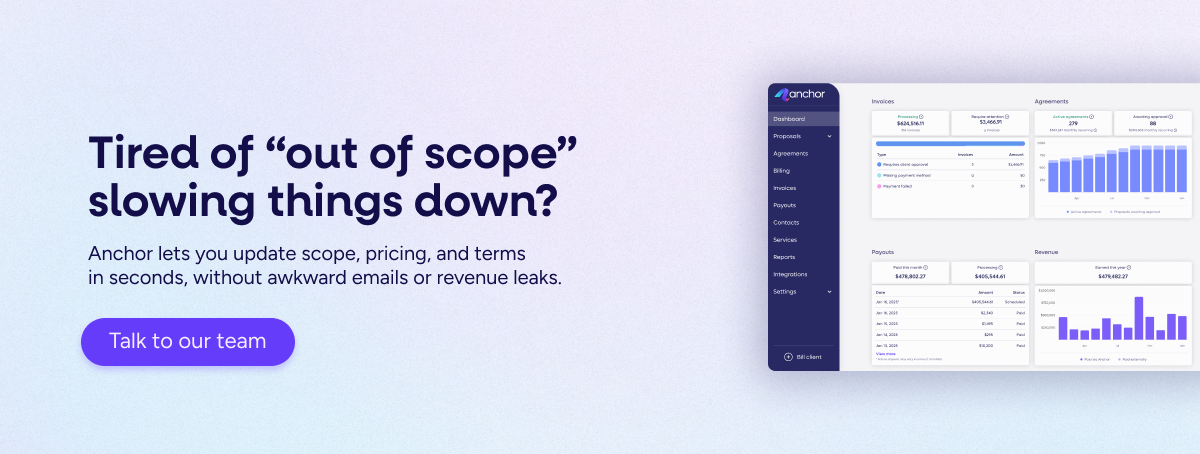
Scope creep happens. Traditionally, updating an agreement is a clunky process requiring new paperwork and signatures. With Anchor, you can make one-click amendments to any active agreement. Whether you need to adjust the scope, add a service, or change a price, you can update the terms instantly. The platform handles the rest, ensuring your billing remains accurate. This flexibility makes changes a simple, transparent part of your partnership rather than a point of friction.
Gain Full Visibility into Your Cash Flow
When you're chasing payments, forecasting cash flow is a guessing game. This uncertainty makes it impossible to plan for growth with confidence. Anchor gives you back that clarity with a dashboard providing a real-time view of your firm's financial health. You can see revenue forecasts, track payments, and get a clear picture of your projected cash flow. Having these actionable insights at your fingertips empowers you to make strategic business decisions, knowing your revenue is predictable.
What Are the Best Practices for Modern Collections Management?
Shifting your collections process from a reactive chore to a proactive system is one of the best things you can do for your firm's health. It's not about chasing harder; it's about building a smarter, more automated workflow that prevents late payments from happening in the first place. Adopting modern best practices means you can spend less time in your accounts receivable and more time serving your clients and growing your business. These strategies focus on clarity, convenience, and automation to create a seamless experience for both you and your clients, ensuring you get paid on time, every time.
Make It Easy for Clients to Pay
Think about the last time you had a frustrating online checkout experience. You probably abandoned your cart. The same principle applies to your invoices. If paying you is a hassle—requiring clients to find a checkbook or navigate a clunky payment portal—you're creating unnecessary friction that leads to delays. The key is to make the payment process invisible. Instead of sending a PDF and hoping for the best, you can use a platform like Anchor to create an e-commerce-like experience. Clients review your interactive proposal, accept the terms, and connect their payment method right then and there. It's a one-and-done action that puts you in control and makes paying effortless for them.
Automate Everything You Can
If you're still manually creating and sending invoices, you're leaving money on the table and wasting valuable time. Manual processes are not only tedious but also prone to human error—an invoice gets forgotten, a number is mistyped, and suddenly you're dealing with revenue leakage. True collections automation uses workflow tools to streamline the entire process from start to finish. With Anchor, the moment a client signs your proposal, the system takes over. Invoices are generated and payments are collected automatically based on the agreed-upon schedule. This removes the need for manual follow-up and ensures your cash flow is consistent and predictable, all without you lifting a finger.
Set Expectations from Day One
The single best time to establish your payment process is before you've done any work. Your engagement letter or proposal shouldn't just outline the scope of services; it should clearly define the financial terms of your relationship, including when and how you expect to be paid. This is where Anchor's smart proposals shine. They are legally binding agreements that bake the payment process directly into the signing stage. When a client commits to working with you, they also commit to your payment terms by connecting their bank or credit card. This simple step removes all ambiguity and transforms an awkward, ongoing conversation about money into a clear, upfront agreement.
Use a System That Integrates with Your Tools
Your firm runs on a stack of essential software, from practice management to accounting. A collections tool that doesn't communicate with your existing systems just creates more work, forcing you to manually reconcile payments and update records across different platforms. While your CRM and accounting software are great at what they do, they typically don't provide the robust processes needed for modern credit and collections. You need a system that acts as the connective tissue for your financial operations. Anchor integrates seamlessly with tools like QuickBooks, Xero, and Karbon, ensuring that once a payment is collected, it's automatically reconciled. This closes the loop on your workflow and gives you a reliable, single source of truth.
Stop Chasing. Start Getting Paid.
Let's be honest: chasing down late payments is probably the least favorite part of your job. It's awkward, time-consuming, and pulls you away from the client work you actually enjoy. But what if you could eliminate that chase entirely? The secret isn't about becoming a more persistent debt collector; it's about building a system where chasing payments becomes a thing of the past.
This is where automation comes in. Modern collections management software transforms your process from a reactive, manual headache into a proactive, streamlined workflow. Instead of living in spreadsheets and sending endless follow-up emails, you can use tools that handle the entire process for you. This approach helps you collect money faster, increases your firm's efficiency, and even improves client relationships by removing those uncomfortable money conversations. When the process is clear and predictable, there are no surprises.
A truly automated system does more than just send invoices. It creates a seamless experience from the moment a client signs your proposal to the moment the cash hits your bank account. This is where a platform like Anchor changes the game. By integrating proposals, billing, and payments, Anchor ensures you get paid on time, every time. It starts by capturing payment details upfront in a digital engagement letter, then automatically drafts invoices and processes payments based on the terms you agreed upon. There's no manual entry, no awkward follow-ups, and no revenue slipping through the cracks. It's time to shift your focus from collections to client service and growth, knowing your cash flow is secure.
Frequently Asked Questions
My accounting software already has recurring invoices. How is this different? That's a great question because it gets to the heart of the problem. Your accounting software is great for sending invoices, but that's where its job ends. It doesn't do anything to ensure that invoice actually gets paid on time. An automated collections platform like Anchor handles the entire client engagement lifecycle. It starts with a smart proposal where your client agrees to the terms and connects their payment method before any work begins. This means the payment is secured from day one, turning a reactive chase into a proactive, hands-off process.
Will my clients be resistant to providing their payment information upfront? It's natural to worry about changing a process, but you might be surprised by how much clients appreciate the convenience. Framing is everything. You're not demanding payment; you're offering a modern, secure, set-it-and-forget-it system that makes their life easier. Once they connect their payment method during the proposal stage, they never have to think about digging up a credit card or writing a check for your services again. It establishes you as a professional firm with clear processes, and most clients see that as a huge plus.
What happens if a client's scope of work changes mid-engagement? Scope creep is a reality for every firm, and traditional processes make it a pain to handle. You have to draft a new contract, get it signed, and then remember to update your billing. With a platform like Anchor, you can make one-click amendments to any active agreement. If a client needs to add a service or adjust the scope, you can update the terms instantly. The system automatically adjusts the billing schedule, keeping everything accurate and transparent without the administrative hassle.
How long does it take to get a system like this up and running? When you hear "new software," you might picture a months-long implementation project, but that's not the case here. You can get a platform like Anchor fully implemented in a single afternoon. The setup process is straightforward and focuses on configuring your services and proposal templates. Because it integrates with the accounting and practice management tools you already use, it fits right into your existing workflow without causing major disruptions.
Is it secure to have clients connect their payment methods through a platform like Anchor? Absolutely. In fact, it's far more secure than the old way of doing things, like writing down credit card numbers or emailing unencrypted invoices. Reputable platforms like Anchor use bank-level security and encryption to protect all sensitive financial data. This ensures that your clients' information is kept safe and that you are compliant with payment security standards, giving both you and your clients peace of mind.